Doctors across Canada agree: the crushing paperwork in medicine is unsustainable. In a new survey of 1,924 practising physicians, residents and medical students, 90 per cent said administrative tasks contribute to burnout.
At a time when Canada desperately needs more doctors, more than half plan to reduce their hours, one in four are thinking about early retirement or leaving the profession altogether and more than one-third would discourage medical students from entering their specialty.
None of this bodes well for the future, especially when the next generation is well aware of the issue: More than 70 per cent of medical students say they are worried about the amount of time they may spend on paperwork.
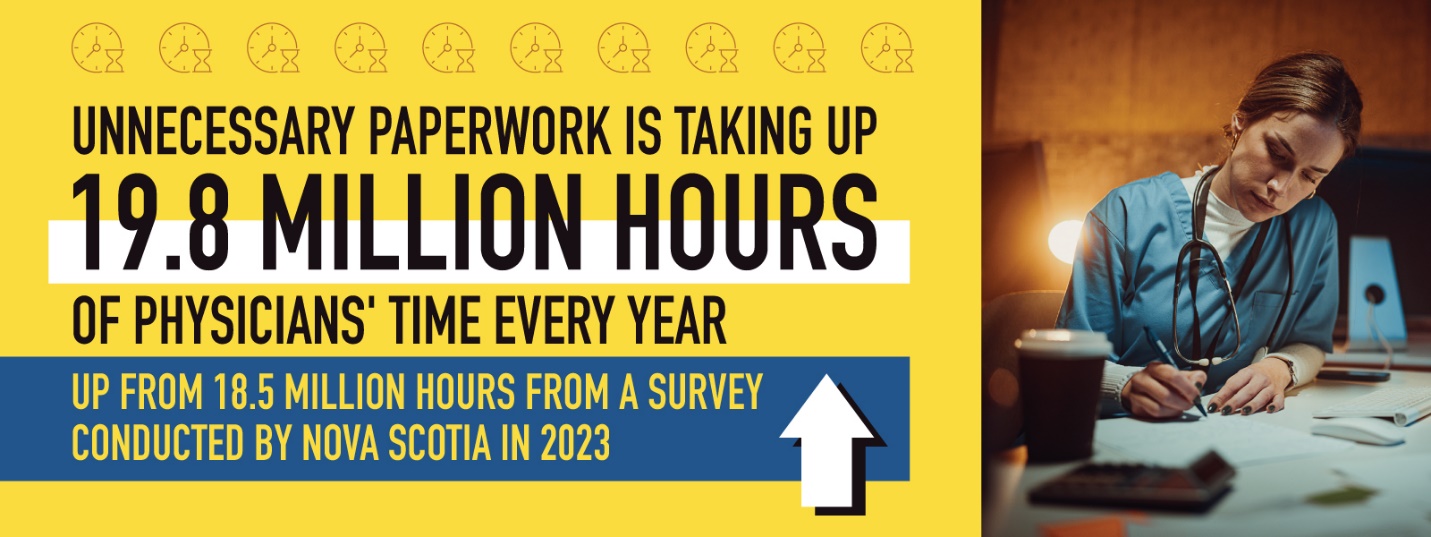
The root of all this? An increasing share of physicians’ limited energy, focus and time – an average nine hours a week – is spent on completely avoidable paperwork. Nearly half (47 per cent) of admin work is considered unnecessary, an increase from 38 per cent in 2023.
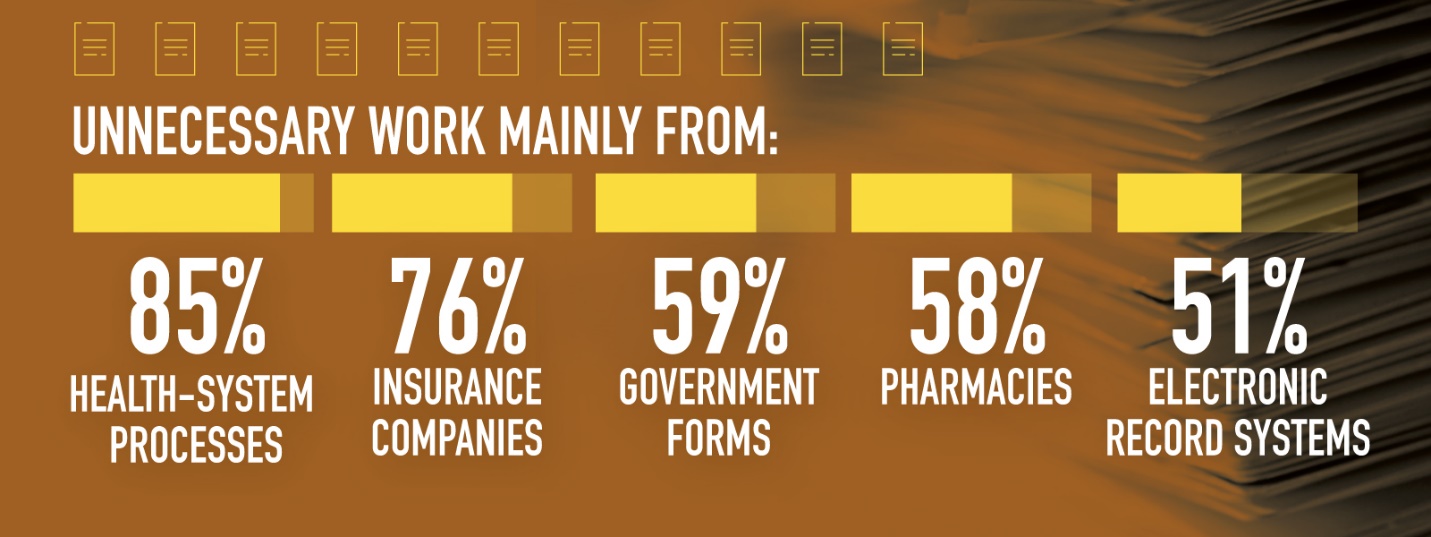
Doctors say the most demanding tasks are insurance paperwork, referrals, test requisitions and electronic documentation.
The biggest pain points include the Disability Tax Credit (DTC) forms and private insurance forms, with 85 per cent and 84 per cent of physicians, respectively, rating them as burdens. Other culprits, like Canada Pension Plan disability benefit forms, can take on average 43.3 minutes to fill out. While sick notes only take 10 minutes, physicians can receive more than 130 requests a year.
Canadian provinces are stepping in to reduce burdens on physicians, starting with sick notes.
Saskatchewan, British Columbia and Nova Scotia restrict sick-note requirements to absences longer than five consecutive workdays, while Quebec and Ontario prohibit them for absences shorter than three days. Manitoba is expected to introduce legislation that will only allow employers to request a sick note after an employee has been absent for seven days.
However, eliminating short-term sick notes requirements is only the beginning. I believe red tape can be tackled through the acronym IDEAS: innovating and integrating, delegating, eliminating, automating and simplifying and standardizing.
Doctors agree that the most effective solutions will take systemic changes. When asked about the top priority solutions, 72 per cent said eliminating the requirement for physicians to perform some administrative tasks, closely followed by securing interoperability of patient care records (71 per cent) and simplifying insurer processes (70 per cent).
Other impactful solutions would be delegating duties to other health professionals (67 per cent) and providing protected, paid administrative time (67 per cent).
The Canadian Medical Association continues to advocate for doctors on all levels.
In Quebec, we ensured their voices were heard and helped shape new legislation aimed at streamlining administrative processes across the health system. In Manitoba, the sick-note elimination project was supported through the Health Care Unburdened Grant program.
At the national level, we’re continuing to work with the Canadian Life and Health Insurance Association on a single harmonized disability form, and with the Canada Revenue Agency to pilot a much simpler, two-page DTC renewal form.
We continue to call for data interoperability legislation, the safe and ethical adoption integration of Artificial Intelligence, the elimination of sick notes and the need to address federal, national and insurance related forms to reduce the burden on doctors and improve access to care for the almost six million people living in Canada without a regular family physician.
Doctors choose medicine to care for patients, not waste time on repetitive, unnecessary tasks and wade through inefficient processes. Together, we can create a better system that truly supports both patients and the physicians who serve them.


The comments section is closed.