Live entertainment provides a lovely night out for those inclined. Engaging in live arts improves one’s wellbeing and sense of community, something that is becoming all too rare in a world shaped by isolation and social media noise.
Excellent live acting is, at its core, an empathic undertaking, something we in the medical profession share. It is at the heart of The Theatre of Medicine, a three-day accredited Continuing Professional Development program created through a partnership between The Shaw Festival and the Royal College of Physicians and Surgeons of Canada now entering its third year. It applies the practical tools from the performing arts to the development of strategies for creating human connection; tools that can be put into medical practice right away.
On any given day, when performance matters, good actors will bring their best game to the “office” and enter into a relationship with other talented professionals who also bring their emotions, fallibilities, worries and life circumstances both acute and chronic. That relationship must work to produce a high-quality product despite whatever else the actors bring to the office that day.
There is another relationship at play; every actor will tell you there is a tangible relationship that is different each and every time between the actors on stage and the audience. What looks on the surface like a standardized, perfectly reproduced play day after day is far from it from the perspective of an actor. That’s where empathy comes in. Skilled actors are adept at working with what they get on a given day, responding to cues from other actors and the audience and wrestling with their own internal feelings and anxieties to deliver excellence.
In our medical profession, on any given day, one of us walks into a downtown Toronto emergency department and meets 20, 30 or more strangers, many of whom are having one of the worst days in their lives. He must quickly establish a relationship built on understanding that evolves throughout that interaction; understanding results from responsiveness to cues from the patient, family members and other members of the health-care team. It may seem this ability is something that is either innate or built organically through the long and repetitive training of medical school, perhaps inched along by a “communications workshop” or something similar once or twice in an eight-nine year education.
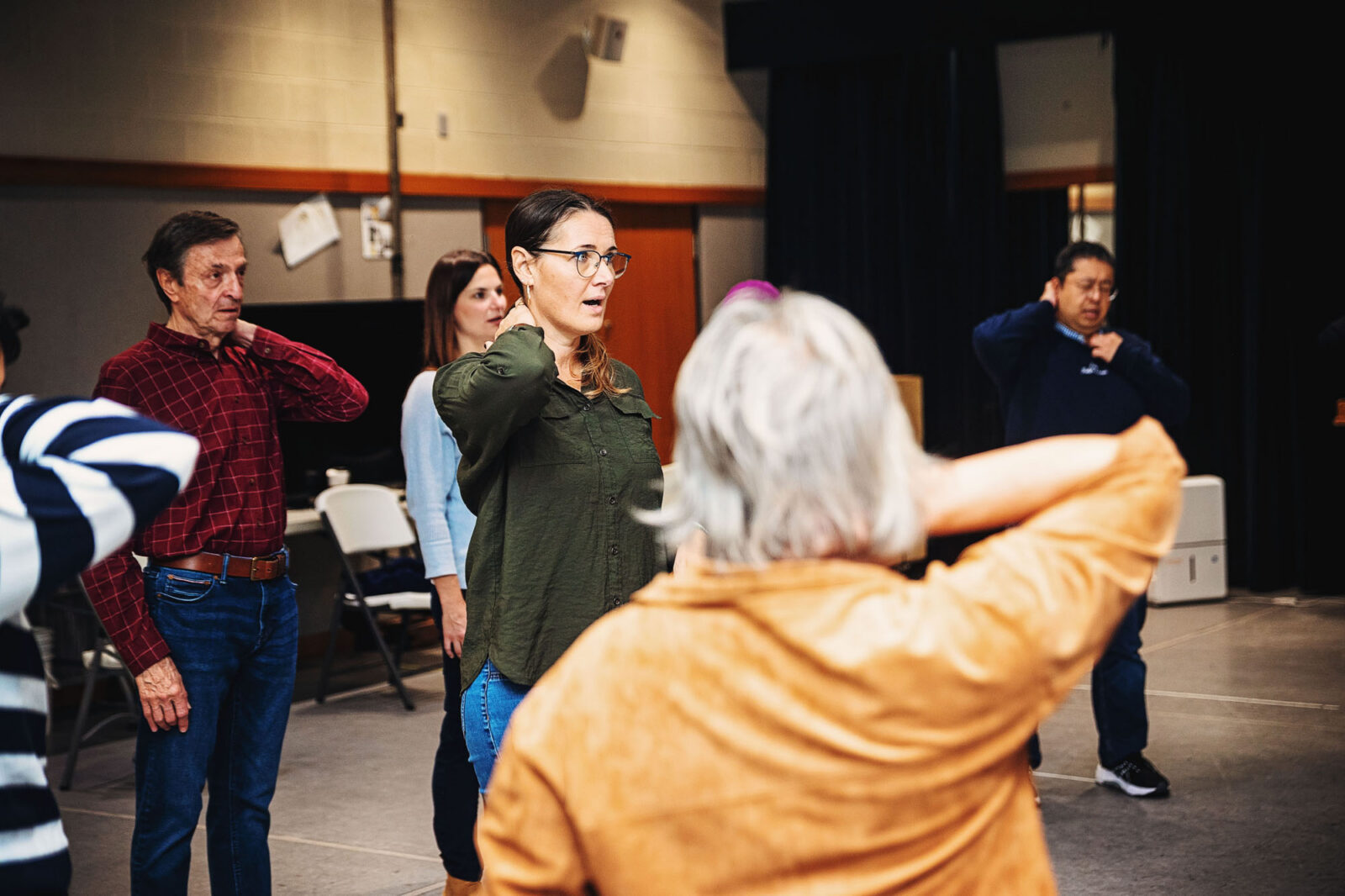
Actors, though, will tell you this is something they learn explicitly and in depth. It is core to what they do. There is constant, deep and meaningful two-way communication built on empathy toward each other and a focus on mutual success occurring between cast members on stage that we, the audience, usually do not even recognize. It doesn’t “just happen” on stage, and there’s no reason to believe it will “just happen” as part of medical education without due focus.
The presence of the arts and artists in medicine, and humanities in medicine, is not a new thing. Since the dawn of time indigenous and traditional medical practices have involved movement, music and story as an integral part of healing and overall health and wellbeing; the hospitals of Ancient Greece had theatres and dance studios. In modern Western medicine, artists and doctors alike have been screaming into the wind for centuries about how critical it is for patients to be seen as a person. What supports endeavours like the Theatre of Medicine now is emerging research that continues to indicate direct connections between improved quality of care and improved patient outcomes. It is hard to deny that these non-technical (often called soft) skills are an essential part of a whole system of medical practice.
Like most things in life, these skills can be improved with practice and, in time, become second nature.
One of the challenges in putting these skills into practice is time. That pressure is typically present with most patient encounters, so how can you take the time to engage when it feels like there isn’t enough? Something as simple as becoming aware of the way you walk in the room or push aside the curtain can help maximize the time you have and the impact you can make. That the two-way communication between doctors and their patients begins even before the opening line, “So, what brings you in today?”
It is with the support of forward-thinking governance and policies like the new CanMeds Framework and Quality Improvement guidelines that unique partnerships, such as The Shaw Festival and The Royal College, can emerge. By combining fields of expertise, we can find new ways of supporting medical education and professional development. This interdisciplinary approach has the potential to create new models of learning, centred around active engagement and practical application.
The arts play a significant role in connecting individuals and communities but have long suffered a lack of perceived value and relegated to simply being a source for entertainment. As the state of our overall societal wellbeing continues to struggle and with the rise of new health strategies like social prescribing, it is becoming clear that there is, in fact, a world of expertise waiting in the wings, ready to be accessed and utilized in service of real human connection.
This connection also can address mental health and burnout, felt by so many health-care providers, by tapping into the reciprocity that exists in how we care for one another. This two-way, whole system approach can reach beyond the doctor-patient encounter and into the health and wellbeing of all of us.
Photo credit: Will Innes from Peach Juice Creative