Healthcare cuts: lessons from pharmacy
John Greiss Healthy Debate blogger

If I harm a pt by making poor surgical decision for which evid was available to guide me;there is recourse. How is gov’t different? #onpoli — Dr. Shady Ashamalla (@AshamallaMD) June 1, 2012 Evidence-based policy. For those of us in the healthcare field, it resonates as an ideal. What better way to allocate resources than

Perspective on payment negotiation for Ontario’s doctors

The Ontario Medical Association (OMA) and Ministry of Health and Long Term Care negotiate fee schedules on a four year basis.  This year, the process has garnered a great deal of attention as negotiations broke down, and the Ministry of Health unilaterally imposed fee reductions in some areas.  Understanding the history of bargaining between doctors

Opinions, biases and conflicts of interest

Andreas Laupacis healthydebate editor

A recent article in a scientific journal has stimulated an interesting debate about the make up of advisory boards in health care, and what constitutes a conflict of interest. Dr. Barry Rubin is a vascular surgeon in Toronto and a member of an Expert Panel of the Canadian Institutes of Health Research (CIHR) that is

Fear and the politics of medicine

I’d like to talk to you a little bit about fear. As many who visit this site are no doubt aware, the Ontario Medical Association (OMA) and the provincial government are in the midst of a fee dispute.  The government has decreed that the total physician services budget will be frozen.  This means that physicians

The challenges of improving hospital food

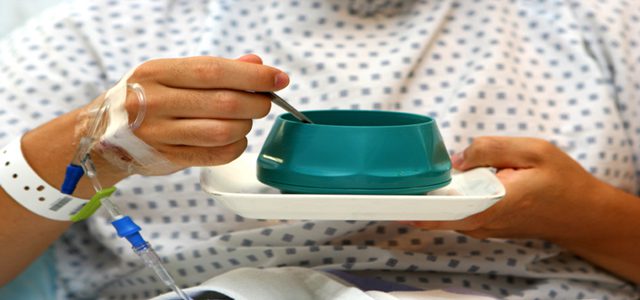
The saying “you are what you eat” has taken on more meaning in Canadian society, with growing interest in the quality, origins and farming practices of the food we eat. For some hospitals, this phrase is “you are what you serve” with food service being increasingly scrutinized, and there are many Ontario hospitals with efforts

Punishing all self-referral is not the solution

Irfan Dhalla blog healthydebate.ca editor

If I were a respirologist, I would receive many referrals from family doctors asking me to determine whether patients with shortness of breath have asthma or chronic obstructive pulmonary disease. I would take a history from each patient and conduct a physical examination. Depending on the situation, I might occasionally order some blood tests or

Ten reasons why the refugee health care cuts are a bad idea

Naheed Dosani healthydebate.ca blogger

I​n 2011, Su-Yun Kim and her husband arrived in Canada hoping for a better life, as many refugee claimants do. In North Korea where they were born and raised, Su-Yun’s husband was involved in political activity, necessitating that they flee from their loved ones and their home for safety. With difficulty, they managed to escape

It’s time to make inter-professional education a priority

Anne Snowdon healthydebate blogger health policy business

By now you must be all too familiar with the challenges facing our health system. And by now you’ve probably also heard that innovation and quality improvement is the way forward for health system transformation. The question is, how do we approach this in practice?  Where do we start?  For me the answer is simple:

Rethinking health care in a time of cutbacks

It looks like much of the next decade or so will be taken up with managing record levels of government and household debt and spending.   With an aging population requiring health care how are we going to continue to pay for necessary health services that we want and need?     Thankfully, advances in telecommunications and computer

Approaches to improving access to specialists in rural regions: Ontario & Germany

In Ontario, specialists are concentrated in larger cities, and Ontarians living in smaller cities and rural regions have challenges accessing specialist services. In Ontario, Local Health Integration Networks (LHINs) use non-financial incentives to try to attract specialists to practice in hospitals that serve rural areas, and provide telemedicine and outreach clinics for patients. In contrast,

The new refugee health care plan – am I understanding it correctly?

Meena Roberts Immigrant Health healthydebate.ca blogger

Starting July 1st, 2012, the Government plans to eliminate health care services to some refugee claimants and significantly reduce services to others.  Refugee claimants will get basic health care in urgent/essential situations, i.e., if they are rushed to the hospital or if they have communicable diseases such as tuberculosis, which could pose a risk to Canadians. 

Ontario’s dust-up over doctor’s fees

The public squabble between the Ontario Medical Association and the Ontario government about tweaking physician payments is to be expected: no one likes cuts to their income.  But in this case the cuts are concentrated in a few sub-specialties, so the pain is concentrated, prompting a particularly loud response. So what’s it about?  There’s an

Advance care planning: a difficult conversation

advance care planning end of life palliative care rasouli ontario health care health care policy

Advance care planning is an important process by which people think about how they would like to be cared for if they are seriously ill.  While most Canadians agree that having conversations about advance care planning are important, fewer than half actually do. In some jurisdictions, advance care planning is done much better than it

Passing the buck: cuts to the Interim Federal Health Program will just mean greater costs for the provinces

Ashley Miller www.healhtydebate.ca blogger

The Interim Federal Health Program (IFHP) was established in 1957 to provide temporary coverage of medical costs for refugee claimants without financial means while they await qualification for provincial or territorial coverage. Citizenship, Immigration and Multiculturalism Minister Jason Kenney recently introduced changes to the IFHP that have prompted outcry across the country from physicians and

Money matters: does ‘pay-for-performance’ improve quality?

Ontario physician payment "Ontario Medical Association" OMA Ministry of Health Negotiations health policy health care

In Ontario, new ways of paying doctors have been introduced in an attempt to improve the quality of their services.  One approach is pay-for-performance, which pays doctors for meeting certain treatment goals. However, there is little high quality evidence that pay-for-performance improves the quality of care, and it appears to have had limited impact in

What do we mean by quality?

Mark Macleod healthydebate blogger

No one speaks of health care at the moment without talking about quality – better quality, quality measures, pay for performance, quality metrics, publication of quality data, accreditation – the list goes on and on.  But, what do we mean by quality? It is my observation that we are running into problems in the discussion

Does more care mean better care?

Canada United States Health Care Reform Health Care Policy

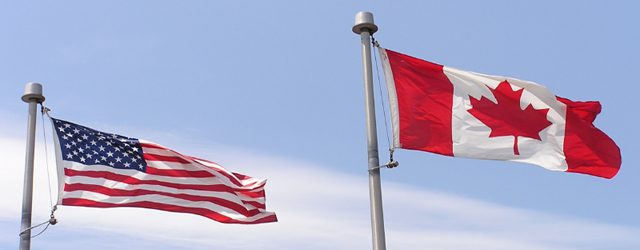
A recent study found that Ontario hospitals that used more resources and spent more money had better outcomes for acutely ill patients than hospitals that used fewer resources.  These findings go against a previous study that looked at the same question in the United States and found that more resources didn’t impact outcomes.  A better